
It was a wet, cold Sunday afternoon in January and presumably my homework was done. I was looking for something to read and scanned along my parents’ rather meagre bookshelves. Picking something quite at random I retired to a corner of the sofa, as near as possible to the coal fire, and began. In no time at all Sunday tea was arriving on a trolley and then the television went on. I remember clearly asking my parents not to talk to me and I was already very adept at blocking out the television. So, it was me and the story until I had finished the whole book later that evening. A reading experience I will never forget. What had totally captivated me was Nevil Shute’s ‘A Town Like Alice.’ I have since read the whole of Shute’s output and enjoyed all of them but for me Alice stands out as something really special.
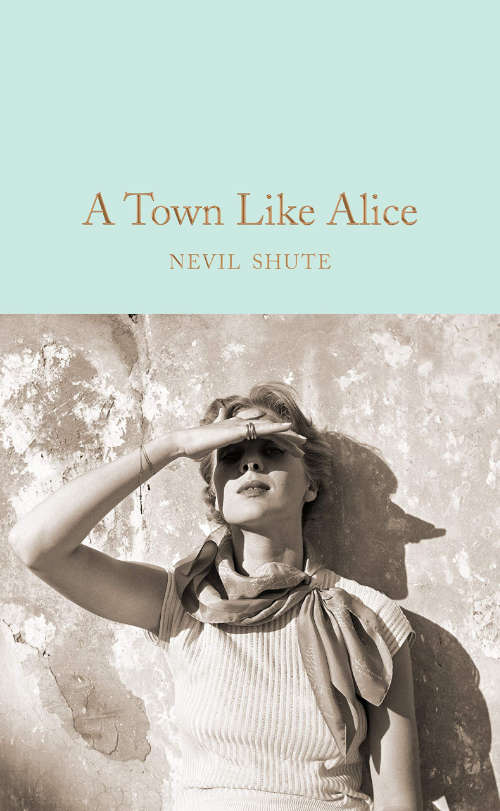
Over the last few weeks I have been re-reading all the Elly Griffiths books about Ruth Galloway, (see Bookends September 2021) they are just as good the second time round but I needed to read something different for this Bookends article. So, there I was again looking along the shelves, mine this time, and I found this rather battered hardback of Alice. Inside the cover is my father’s signature and the date June 1953. Would it still work for me I wondered? I read the first few pages over a cup of coffee and yes, once again I was hooked!
Nevil Shute was born in 1899 in Ealing. He read engineering sciences at Oxford and worked as an aeronautical engineer before becoming a full time writer later in life. His 24 novels are accepted to be rather uneven in quality and it is generally agreed that the books based on the events of the Second World War are by far the best and most satisfying.
The author has based this story on an historical event. During World War II a group of white European women were captured in Sumatra, taken prisoner and under guard were walked hundreds of miles around the island as there was no camp for women. Shute lifted this story and for his own purposes placed it in Malaya. It was seen as very demeaning for a Japanese soldier to be in charge of a group of women and they really didn’t know what to do with them. Thus they were marched from settlement to settlement with each village being forced to provide some basic food and shelter before their unwelcome visitors were moved on once more.
You maybe remember the BBC series ‘Tenko’ which was broadcast in the early 1980s. It focused on similar historical material from events following the fall of Singapore in 1942. I particularly remember the way the expat community in the Far East could not for a moment believe that the war would come anywhere near to them. As the Japanese army hacked their way through supposedly impenetrable jungle and forest, the effects of European complacency eventually became clear for all to see.
The heroine in ‘A Town Like Alice’, and heroine she is indeed, is Jean Paget. She inherits a fortune from a little known Scottish uncle but has to cope with the conditions he places on this gift. In a rather parsimonious and misogynistic fashion, Jean will not be allowed this fortune until she is 35, until then a London solicitor will be the trustee and he will decide if she should be permitted any funds upfront. Inevitably this creates quite a close relationship between Jean and Noel Strachan, the elderly widower, whose life is rather empty and lonely. He follows her adventures and travels vicariously and always has her best interests at heart.
Having, in war time, witnessed the struggles of Malay women to deal with the basics of living, like collecting water and dealing with laundry, Jean wants to return, post 1945, and use some of her money to put in wells in these small villages. Later when she is living in the Australian Outback she again wants to improve the lot of women, and thereby of everyone, through creating a better town with plenty of facilities. Somewhere that would be a town like Alice (Springs). Hence the title of the book.
This is both a war story and a passionate love story which encompasses the world and several generations. At the end Noel, the solicitor, seems to realise that through all these many years he has in fact been in love with Jean and indeed how different his life would have been if he had met her when he was younger. However, there is no bitterness involved. Indeed what comes through the writing is the spirit of love and generosity.
Reading ‘A Town Like Alice’ all these years later, it occurs to me how distanced we are now from those war years and how soon those who took an active part in it will be gone. Both my parents were in the forces and I learnt a little of their experiences but there are so many more questions that I should have asked and now it is too late. Truth is a tricky concept as I have voiced before in this column but it does worry me that in future years we may be the victims of all sorts of revisionist history and there will be nobody left to say yes it did happen like that … or indeed the reverse.
I commend ‘A Town Like Alice’ to you. It really is a terrific read and does not have to be undertaken in one sitting! Happy reading.