Where do you park in Cookham? I have been there to ponder upon the rather difficult art in the Stanley Spencer Gallery and I have sat in the sunshine by the river and had lunch at the Ferry Inn. But, goodness me, the parking!
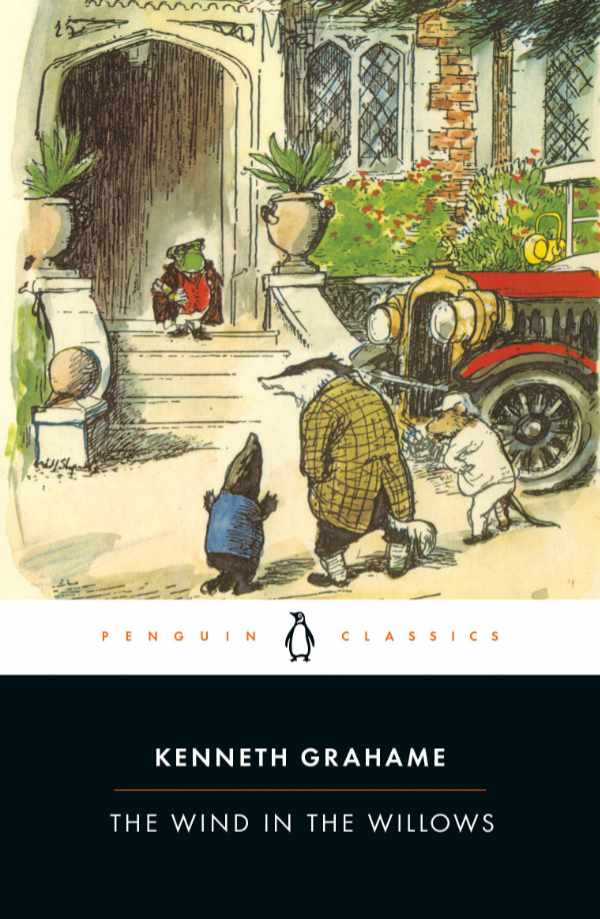
I suspect that Kenneth Grahame would not have been bothered by such problems early in the twentieth century. He grew up in the village, weekended there (is that a word?) and then retired there when he left his job as secretary at the Bank of England. If you are of a certain age you will surely know by now that the book I have in mind is Wind in the Willows. Quite probably you haven’t read it or had it read to you for a very long time. That was definitely the case for me as I sat on the train and opened my new copy of Slightly Foxed (the delightful literary quarterly review that I wrote about in October 2020. Still available on the website) and found the first article was about that riverbank. Later in the day when I returned home, I had already decided I would read it again. Searching my shelves, finding various pop-up books of Wind in the Willows bought for my grandchildren, I became anxious that the old paperback I had in mind had gone but then there it was with the dear and familiar picture on the front of Ratty and Mole drawn in quintessentially English style by EH Shepard.
AA Milne, of Winnie the Pooh fame, knew Kenneth Grahame and both shared the talents of EH Shepard, illustrating their books wonderfully well. For me the illustrations are a vital and intrinsic part of reading the Wind in the Willows. Just as Alice in Wonderland has to be drawn by John Tenniel (although I do have a fascinating and slightly subversive copy of Alice illustrated by Salvador Dali!) so Wind in the Willows has to have EH Shepard. A few years ago I went to an exhibition of his work and was amazed to learn that he had been a war artist, recording events, happenings and characters of the First World War. A far cry indeed from Toad, Badger and a Thames riverbank.
Both AA Milne and Grahame developed their writing from bedtime stories for small sons and it was in 1908 that Grahame wrote the book of his life. He has a strong, confident, authorial voice, often humorous and always showing immense affection for every aspect of the natural world. He is a natural writer, producing beautiful prose and delightful dialogue.
As well as leading me back to The Wind in the Willows, the Slightly Foxed article also led me down an unexpected pathway to a book of which I had never heard: Wild Wood by Jan Needle. It had never occurred to me before but the much-loved characters in Grahame’s decidedly conservative book are of course the privileged: the arrogant and moneyed lord of the manor, the county gentleman, the elderly statesman figure with private means and the solidly middle class character, a property owner of course. But, what of the others, those who would have been regarded by Grahame in Edwardian times as the lower orders?
So, this book is about the ferrets, weasels and stoats who live in the Wild Wood. Under the surface are the unions, the communist party and characters called Boddington, Adnam and Tetley, which for the uninitiated are names of ales!
A revolution is plotted but inevitably initial success is followed by disparate factions, lack of accepted leadership and a problem with funds. If the workers stop working, then where does the money come from? Replacing one social order with another is never going to be easy, as history proves time and again. This book is very funny but also has many subtexts dealing with the interpretation of those complex questions of greed and need, envy and luxury. The author takes full advantage of wordplay on the term ‘riverbank’ by suggesting Toad and his friends are ‘The River Bankers.’ There are of course many stories with an allegorical, political under layer: George Orwell’s Animal Farm for instance and Jonathan Swift’s Gulliver’s Travels. The latter is a satirical take on the state of European government whilst Animal Farm uses the farm creatures as a cover for examining equality and the power of those who rule.
These books deserve reading and rereading. They offer much to enjoy and much to discuss with others.
‘Never read it?’ said Rat in astonishment. ‘Never read it?’
Why, my dear fellow, you simply haven’t lived.’
‘Is it really as good as that?’ the Mole asked humbly.
The Rat pulled up a fireside chair. ‘Sit down, and let me explain.’
(Sue Gee, in the style of Kenneth Grahame. She is the writer of the article that led me back in time,)
Should you be in Cookham take care that you don’t find Toad trying manically to reverse into a non-existent parking place in the Ferry Inn car park.